
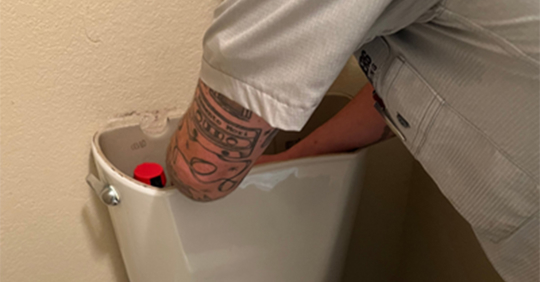
Water bills across North Texas have been trending upward. Summer heat drives up outdoor irrigation costs significantly, and aging fixtures or hidden leaks only push the monthly total higher.
At its core, lowering your water bill in 2026 comes down to using less water without sacrificing comfort. At Molberg Plumbing, we help homeowners across Fort Worth and surrounding communities identify practical plumbing upgrades that reduce waste, improve efficiency, and hold up in Texas heat. Below are 6 upgrades that consistently deliver measurable savings.
1. Schedule a Professional Leak Inspection
Many of the highest water bills we see have nothing to do with lifestyle changes. They trace back to small leaks that go unnoticed for months.
The EPA estimates that household leaks waste nearly 10,000 gallons of water per year. In North Texas, shifting clay soil and extreme heat cycles place added stress on underground pipes and slab foundations. Even a minor crack in a line beneath the home can create a steady, hidden loss that quietly drives up monthly charges.
A professional plumbing inspection goes beyond checking visible fixtures. A licensed plumber can pressure-test the system, inspect exposed piping, evaluate the water heater, and check toilets, hose bibs, and irrigation tie-ins for subtle but continuous flow. In some cases, advanced leak detection equipment pinpoints underground issues without tearing up flooring or landscaping.
2. Install a Smart Irrigation Controller
Outdoor watering often represents the largest portion of residential water use, especially from late spring through early fall. Clay-heavy soils, intense summer heat, and periodic drought conditions create a challenging environment for lawns and landscaping.
A smart irrigation controller adjusts watering schedules based on local weather data, rainfall, and soil moisture conditions. A smart controller prevents watering during or immediately after rain and fine-tunes run times so sprinklers do not oversaturate the soil.
For homeowners with larger lots or elaborate landscaping, this single upgrade can produce some of the most significant annual savings.
3. Replace Aging Water Heaters with High-Efficiency Models
Water heating accounts for a substantial portion of a home’s energy bill, and it also affects water usage. Older tank water heaters often lose efficiency over time due to sediment buildup, which is common in areas with mineral-heavy water.
Fort Worth water contains naturally occurring minerals such as calcium and magnesium. Over time, sediment accumulates in traditional tank heaters, forcing the unit to work harder and sometimes encouraging longer shower times while waiting for consistent hot water.
High-efficiency tank water heaters and tankless systems reduce standby heat loss and deliver hot water more effectively. Tankless units heat water on demand, which eliminates the need to maintain a large volume of stored hot water.
Homeowners who switch to ENERGY STAR certified water heaters may qualify for rebates or federal tax incentives, depending on the model and current programs. Reduced energy consumption lowers utility bills, and efficient performance shortens the time spent running taps while waiting for hot water.
4. Convert to Pressure-Regulating Valves
Many homes in North Texas experience high municipal water pressure. While strong pressure may feel convenient in the shower, it places stress on pipes, fixtures, and appliances. It also increases the volume of water flowing through faucets and showerheads.
A pressure-regulating valve, or PRV, reduces incoming water pressure to a safer, more efficient level. The recommended residential water pressure typically falls between 50 and 70 psi. When pressure exceeds that range, water flows faster than necessary, which increases overall consumption.
By stabilizing water pressure, a PRV extends the life of plumbing components and reduces unnecessary water use. Over time, lower flow rates contribute to lower monthly bills and fewer plumbing repairs.
5. Install a Water Softener to Improve Appliance Efficiency
Fort Worth’s water hardness varies by neighborhood, but many areas experience moderate to hard water conditions. Hard water leaves scale buildup inside pipes, water heaters, dishwashers, and washing machines.
Scale reduces efficiency by restricting flow and insulating heating elements. As a result, appliances consume more energy and sometimes require additional water to achieve the same results.
A properly sized water softener reduces mineral buildup, which helps water heaters operate efficiently and extends the lifespan of plumbing fixtures. Softer water also improves soap performance, which can lead to shorter wash cycles and reduced detergent use.
Homeowners who invest in water softening often notice long-term savings in appliance maintenance, energy costs, and plumbing repairs.
6. Replace Old Supply Lines & Fixtures
Kitchen and bathroom renovations present an opportunity to upgrade hidden plumbing components. Older supply lines, shutoff valves, and connectors may not leak visibly but can restrict flow or develop slow drips.
When remodeling in 2026, homeowners should consider replacing outdated plumbing hardware with modern, corrosion-resistant materials. PEX piping, for example, resists scale buildup and performs well in fluctuating temperatures.
Upgrading during a renovation reduces labor overlap and ensures that new fixtures operate at peak efficiency. Over time, improved flow dynamics and reduced risk of small leaks contribute to lower water usage.
A Practical Path to Lower Bills in 2026
Lowering your water bill does not require a full home overhaul. Many Fort Worth homeowners see meaningful savings by combining two or three strategic upgrades, such as installing new fixtures, adding a smart irrigation controller, and addressing hidden leaks.
Water efficiency also supports broader sustainability goals in a region that periodically faces drought and water conservation measures. Every gallon saved reduces strain on local water supplies and infrastructure.
If your monthly bill has been creeping upward, a plumbing efficiency assessment can identify where water is being lost and which upgrades will provide the strongest return. Our team can help evaluate your home’s water usage patterns, inspect current plumbing systems, and recommend targeted improvements based on actual need. Contact us online or call (817) 476-9963 today.